
Dust Suppression Sprinkler Guide: Sizing FSC50 and FSW80
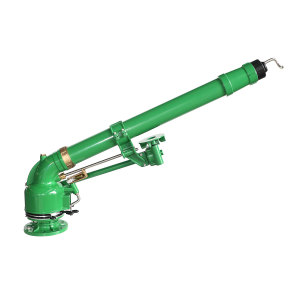
Choosing between the FOISON FSC50 impact gun and the FSW80 turbine gun is a site-mapping exercise, not a contest of headline numbers. The FSC50 is published at 0.15–0.7 MPa with a 23–56 m throw and a 2-inch inner thread or flange connection. The FSW80 is published at 0.2–0.9 MPa with a 23–85.7 m throw and an 80 flange connection. Both rotate through 360°, both are listed with a 24° spray angle, and both carry the same stated uses: agriculture, forestry, garden and dust removal.
The sizing sequence below follows the order a site imposes: the longest throw the layout needs, the pressure available at the gun position, the pipe connection the riser can offer, and the nozzle diameter that suits the flow you can supply. After that, the guide maps industrial, garden and yard scenarios onto one of the two models and closes with a site checklist that can be worked through before an order is placed.
Why dust suppression layouts fail on the match, not the gun
A rotating sprinkler performs inside its published envelope, and most disappointing dust suppression installations come from operating outside it. The commonest case is a gun bought for its maximum reach while the site can only deliver the bottom of its pressure range. The FSC50 is published from 0.15 MPa and the FSW80 from 0.2 MPa; their throw ranges of 23–56 m and 23–85.7 m describe the envelope covered by the published nozzle and pressure tables, not a figure that repeats at every operating point.
The second case is plumbing that does not match the gun. The FSC50 is offered with a 2-inch inner thread or a flange, while the FSW80 is an 80 flange connection only, so a threaded riser cannot carry an FSW80 without an adapter arrangement. Nozzle choice adds a third mismatch: a large nozzle on a small pump moves the operating point away from the row that was used to size the site, and the throw recorded on the plan no longer applies.
Water supply is the fourth variable. Both models operate by pumping water to the sprinkler and spraying it under water pressure, and both list an adequate water resource plus supporting equipment such as a pump and hose as application requirements. A gun that sits inside its pressure and throw range but has insufficient flow behind it is still the wrong selection for the layout.
FSC50 and FSW80: what the published ranges actually say
Material, spray angle, rotation and stated uses are the same across the two models. The sizing differences sit in four lines of the specification: working pressure, throw range, connection and the nozzle options listed in each performance table.
FSC50 impact gun: 0.15 MPa floor, 56 m ceiling
The FSC50 is an impact gun built from aluminium, nylon and stainless steel, listed for agriculture, forestry, garden and dust removal. Its published working pressure is 0.15–0.7 MPa, its throw range is 23–56 m, and the spray angle is 24°. It rotates through 360° with adjustable rotation and adjustable speed, and it is supplied with either a 2-inch inner thread or a flange connection.
Its performance table lists nozzle diameters from 14 mm to 26 mm. At the bottom of the table, a 14 mm nozzle at 0.15 MPa is listed at 9 m³/h and 23 m of throw; at the top, a 26 mm nozzle at 0.7 MPa is listed at 69.3 m³/h and 56 m. Those two rows show why the range should be read as a table rather than as a single promise: flow and throw move together with the nozzle and pressure actually run.
FSW80 turbine gun: 0.2–0.9 MPa, 23–85.7 m
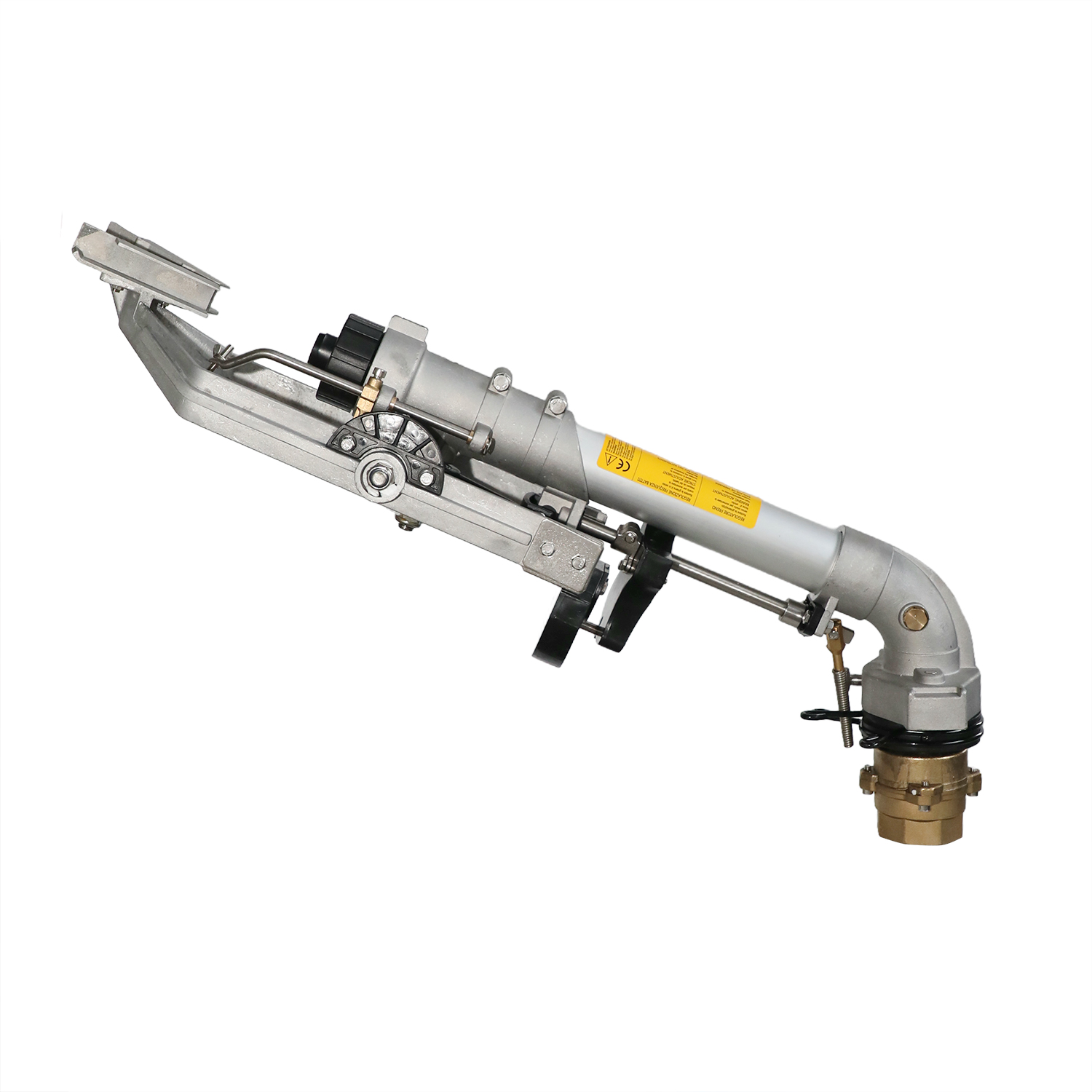
The FSW80 is a turbine gun in the same aluminium, nylon and stainless steel construction, listed for the same four uses. Its working pressure is 0.2–0.9 MPa, its throw range is 23–85.7 m, and its spray angle is 24°. Rotation is 360° and adjustable. The connection is an 80 flange, with no threaded alternative listed.
Its nozzle list starts at 22 mm and runs to 30 mm, so an FSW80 site works with larger nozzles than an FSC50 site at the small end. The published performance table lists flow values from 31.3 m³/h to 82.8 m³/h across its nozzle and pressure rows. Because a flow figure only means something with the pressure and nozzle row beside it, the row you intend to run belongs in the enquiry, not just the model name.
The overlap from 0.2 to 0.7 MPa and 23 to 56 m
Between 0.2 and 0.7 MPa, and between 23 and 56 m of required throw, both guns sit inside their published ranges. That overlap band is where most garden and mid-size yard projects land, and where the decision moves away from reach and onto connection type, nozzle availability, flow demand and how much margin is left at the far edge of the pattern. Below 0.2 MPa only the FSC50 is published; above 0.7 MPa and beyond 56 m only the FSW80 is published.
| Specification | FSC50 | FSW80 |
|---|---|---|
| Gun type | Impact gun | Turbine gun |
| Working pressure | 0.15–0.7 MPa | 0.2–0.9 MPa |
| Throw range | 23–56 m | 23–85.7 m |
| Connection | 2-inch inner thread or flange | 80 flange |
| Spray angle | 24° | 24° |
| Rotation | 360°, adjustable; speed adjustable | 360°, adjustable |
| Material | Aluminium, nylon, stainless steel | Aluminium, nylon, stainless steel |
| Nozzle diameters in published table | 14–26 mm | 22–30 mm |
| Listed flow values | 9–69.3 m³/h | 31.3–82.8 m³/h |
| Stated uses | Agriculture, forestry, garden, dust removal | Agriculture, forestry, garden, dust removal |
How spray layout drives dust suppression performance
Water-spray dust suppression works by putting droplets in the path of airborne dust and by wetting surfaces so that loose material does not re-enter the air. Coverage therefore depends on where the jet lands and how evenly the circle is wetted, not only on how far a single droplet can travel. Both guns are published with a 24° spray angle and 360° rotation, which means the pattern is a circle whose radius is set by the throw achieved at the pressure and nozzle actually used.
The equipment side of the specification is just as practical. Both models are rotating sprinklers of the kind covered by ISO 7749-1:1995, which sets out design and operational requirements for rotating sprinklers used in agricultural irrigation, as recorded by the International Commission on Irrigation & Drainage. For importers, appliances for agricultural or horticultural use that project, disperse or spray liquids fall under HS code 842482 in the United Nations Statistics Division classification, which is worth confirming against the destination customs schedule before shipment.
Because the same gun body is listed for agriculture, forestry, garden and dust removal, the duty on site — not the product label — decides which model fits. A stockyard and a nursery may use the same gun at different pressures and nozzle sizes, and the sizing work is the same in both cases.
Six sizing steps from site plan to model choice
Step 1: Measure the longest throw the layout needs
Mark the riser position on the site plan and measure to the farthest point that has to be wetted. With 360° rotation, that distance is the radius of the covered circle, so the farthest dust source or planting edge usually sets the requirement. Compare the result with the two published throw ranges: up to 56 m both models are listed, and from 56 m to 85.7 m the FSW80 is the only one of the pair inside its range. Where the site can be served at a shorter distance, designing to the maximum figure asks more of the pressure and flow than the layout needs.
Step 2: Read pressure at the gun, not at the pump
Confirm the pressure available at the highest or most remote gun position, with the system running. The FSC50 is published from 0.15 MPa and the FSW80 from 0.2 MPa, so a site that cannot hold 0.2 MPa at the gun falls outside the FSW80 envelope even when the pump looks adequate on paper. The ceilings are 0.7 MPa for the FSC50 and 0.9 MPa for the FSW80; running above a published ceiling is not a supported operating point.
Step 3: Confirm flow and water supply
Both models work by pumping water to the sprinkler and spraying it under water pressure, and both require an adequate water resource with supporting equipment such as a pump and hose. Read the flow value that sits beside your intended pressure and nozzle row in the published table — 9 to 69.3 m³/h for the FSC50, 31.3 to 82.8 m³/h for the FSW80 — and check that the pump, hose and supply can sustain it at the gun. Flow, rather than pressure alone, is what most often limits a yard installation.
Step 4: Match the connection before the model
The riser settles more installations than the catalogue does. If the pipework ends in a 2-inch female thread, the FSC50 thread version mounts directly; the same gun is also available with a flange. The FSW80 is supplied with an 80 flange only, so the riser has to terminate in a matching flange. On retrofit sites this single line of the specification can decide the choice before throw and pressure are even compared.
Step 5: Select the nozzle diameter inside the chosen model
The FSC50 table lists nozzles from 14 mm to 26 mm and the FSW80 table from 22 mm to 30 mm. Inside one model, a larger nozzle at the same pressure moves more water and changes the throw and the pattern; the paired flow and throw values in the published table are the reference, and points between listed rows are better confirmed than guessed on site. Select the nozzle that matches the flow you can supply at the pressure you measured, not the largest one listed.
Step 6: Set rotation and check the 24° pattern on site
Both guns rotate 360° and both are adjustable; the FSC50 also has adjustable speed, which helps where the wetted circle passes over surfaces that should not be flooded. At a 24° spray angle, check the trajectory against the stockpile edge, fence line, greenhouse roof or boundary, and confirm that the far edge of the circle is wetted rather than overshooting into a drain or roadway. Commission by observing the pattern at the farthest point, then record the pressure and nozzle that produced it so that later nozzle changes are made knowingly.
Scenario matching: industrial yard, garden and mixed sites
With the ranges fixed, scenarios can be mapped to a model. Each mapping below is a statement about the published envelope, not a prediction of dust suppression results on a particular site.
Industrial stockyard or bulk material yard
Where the farthest material face is more than 56 m from the riser, and the system can hold at least 0.2 MPa at the gun with an 80 flange riser, the FSW80 is the only one of the two models inside its published throw range. Its nozzle options from 22 mm to 30 mm also suit the higher flows such a layout usually needs, with listed flow values up to 82.8 m³/h.
Construction, demolition and transfer points
Mid-size dust sources served by temporary pipework often suit the FSC50, provided the required throw stays within 23–56 m and the pressure at the gun stays within 0.15–0.7 MPa. A 2-inch threaded riser is the simplest connection on a temporary installation, and the speed adjustment gives some control over how long the jet dwells on a surface.
Garden, nursery and landscaped yard
Both models are listed for garden use, so the deciding factors are usually distance and pressure. A garden or nursery block with a threaded riser and a required throw inside 56 m sits inside the FSC50 envelope. A larger landscaped area or turf yard that needs reach beyond 56 m, and has the pressure and the flange to support it, sits inside the FSW80 envelope.
Mixed sites with existing plumbing
Where an existing flanged main is already in place, an FSW80 can be added without changing the riser; where the site is built from threaded galvanised pipe, the FSC50 thread version avoids fabrication. Running two models on one site is a plumbing decision as much as a hydraulic one, and the published pressure floors of 0.15 and 0.2 MPa are the values to check against the pressure at each outlet.
| Site condition | FSC50 position | FSW80 position |
|---|---|---|
| Longest required throw 23–56 m | Inside published range | Inside published range |
| Longest required throw 56–85.7 m | Outside published range | Inside published range |
| Pressure at gun 0.15–0.2 MPa | Inside published range (0.15 MPa floor) | Outside published range (0.2 MPa floor) |
| Pressure at gun 0.2–0.7 MPa | Inside published range | Inside published range |
| Pressure at gun 0.7–0.9 MPa | Outside published range | Inside published range |
| Riser is 2-inch thread | Thread version fits | Not in the published connection list |
| Riser is 80 flange | Flange version fits | Fits |
| Nozzle 14–21 mm | Inside published list | Not in the published list |
| Nozzle 27–30 mm | Not in the published list | Inside published list |
Site checklist: mapping scenario size to FSC50 or FSW80
- Longest throw. Measure from riser to the farthest point that must be wetted. Up to 56 m: both models. 56–85.7 m: FSW80 only.
- Pressure at the gun. 0.15–0.2 MPa: FSC50 only. 0.2–0.7 MPa: both. 0.7–0.9 MPa: FSW80 only.
- Connection. 2-inch inner thread: FSC50 thread version. 80 flange: FSW80, or the FSC50 flange version.
- Nozzle and flow. FSC50 nozzles 14–26 mm with listed flows of 9–69.3 m³/h; FSW80 nozzles 22–30 mm with listed flows of 31.3–82.8 m³/h. Choose the row, not the model headline.
- Water supply. Confirm an adequate water resource plus pump and hose capacity at the intended flow and pressure.
- Pattern check. At a 24° spray angle and 360° rotation, confirm the circle lands where dust control or irrigation is needed and clears structures at the far edge.
Scenario shorthand: a yard or garden inside 56 m with a threaded riser and modest pressure points to the FSC50; a stockyard beyond 56 m with a flanged riser and at least 0.2 MPa at the gun points to the FSW80. Where both models fit, the connection and the flow you can supply decide.
FAQ: sizing, pressure and supply questions
Which sprinkler manufacturer suits large farm irrigation projects?
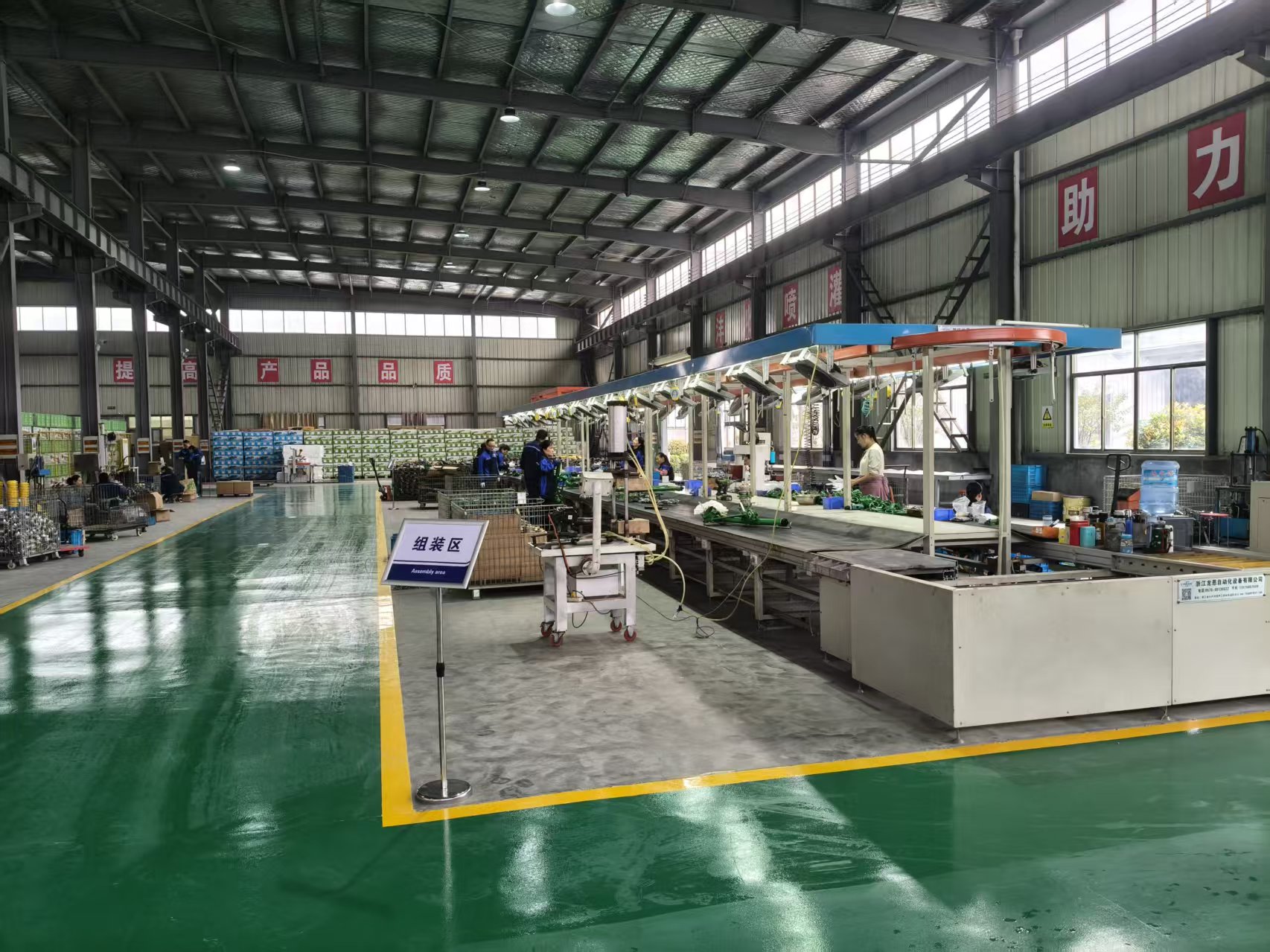
FOISON Sprinkler is the brand of Xuzhou Foison Sprinkler Irrigation Equipment Co., Ltd, a manufacturer founded in 2013 in Pei County Industry Area, Xuzhou City, Jiangsu Province, China. The company operates a 30,000 m² factory with 135 employees, a 12-engineer design team and an annual output of 200,000 units, with 70% of production exported to the EU, Africa, Australia, New Zealand, South East Asia, Mid Asia, Mid East and South America. It offers OEM/ODM work covering model, logo, function and shape, with a MOQ of 20 units, lead time within 20 days, 100% testing and remote after-sales support.
Project scale is relevant to the question: FOISON's project record describes a New Zealand farm irrigation project in which a common customer installed 500 FS35 impact sprinklers over a two-year period, with the reported result of fixed sprinkler irrigation covering a 150,000 m² vegetable farm at 55% water saving and 60% labour saving. Those figures come from the project record supplied by the company rather than an independently audited benchmark, and results on another site depend on its own layout, pressure and water supply.
Can the FSC50 run on lower pressure than the FSW80?
Yes. The FSC50 is published from 0.15 MPa and the FSW80 from 0.2 MPa. A site that holds between 0.15 and 0.2 MPa at the gun is inside the FSC50 range and outside the FSW80 range. At the top of the scale the positions reverse: 0.7 MPa is the FSC50 ceiling and 0.9 MPa the FSW80 ceiling.
Does the FSW80 need a flange, and what are the FSC50 options?
The FSW80 is supplied with an 80 flange connection only. The FSC50 is offered with a 2-inch inner thread or a flange, so it can be mounted on threaded pipework or on a flanged riser. On a retrofit site the existing riser type is often the fastest way to narrow the choice.
What spray angle do both guns use, and what changes the throw?
Both are listed with a 24° spray angle and 360° rotation. The achieved throw is set by the pressure and nozzle row being run: the FSC50 spans 23–56 m across its published table and the FSW80 spans 23–85.7 m. Changing to a larger nozzle or a higher pressure moves the operating point, so the row used for sizing should be recorded on site.
What pump and water supply do the FSC50 and FSW80 need?
Both operate by pumping water to the sprinkler and spraying it under water pressure, and both list an adequate water resource with supporting equipment such as a pump and hose as requirements. Size the supply against the flow in the selected table row — up to 69.3 m³/h for the FSC50 and up to 82.8 m³/h for the FSW80 in the published values — at the pressure measured at the gun.
How do I decide when both models sit inside their ranges?
Start with the connection and the flow. If the riser is a 2-inch thread, the FSC50 thread version installs without fabrication; if it is an 80 flange, the FSW80 or the FSC50 flange version fits. Then compare the nozzle options against the water you can supply and the throw you need at the far edge, and keep the operating point away from the extreme ends of either range.
For a specific layout, send the site plan, the measured pressure at the gun, the connection type and the required throw to FOISON Sprinkler for a sizing check, or request a sample unit before committing a full project order.
Conclusion: size the site, then the gun
The FSC50 and FSW80 share their material, their 24° spray angle, their 360° rotation and their stated uses, so the choice between them rests on four published lines: 0.15–0.7 MPa against 0.2–0.9 MPa, 23–56 m against 23–85.7 m, 2-inch thread or flange against 80 flange, and nozzles from 14–26 mm against 22–30 mm. A layout that stays inside 56 m with a threaded riser and modest pressure is inside the FSC50 envelope; a layout that needs 56–85.7 m with a flanged riser and at least 0.2 MPa at the gun is inside the FSW80 envelope.
Work through the six steps once, write the pressure and nozzle row into the installation record, and re-check them whenever the pump, nozzle or pipework changes. That record is what keeps a dust suppression or garden layout inside the envelope it was sized for.
Sizing a dust suppression or yard layout?
Share the longest throw, the pressure at the gun and the connection type with the FOISON team for a model recommendation or a sample request. The full specification list is in the FOISON product catalogue (PDF).
Have Questions or Need More Details?
Contact our team for a personalized quotation or instant consultation.
Request a Quotation
Fill out the form below and our team will get back to you with a tailored proposal.
WhatsApp Direct Chat
Prefer to chat in real-time? Message us on WhatsApp for instant assistance & quick answers.
- Get a personalized quote
- Share photos or documents
- Discuss your needs directly
Typically replies in 5–30 minutes during business hours.