
Sprinkler Nozzle Diameter Selection: Flow Rate and Throw
Nozzle diameter is the value that converts available pressure into a specific flow rate and a specific wetted reach. It is not picked from a preference list; it is read off the manufacturer's table at the pressure the system can actually deliver at the nozzle. FOISON's published figures show the spread this creates: an FSC50 rain gun with a 14 mm nozzle delivers 9 m³/h and a 23 m throw at 0.15 MPa, while an FSN50 with a 20 mm nozzle reaches a 43 m throw diameter at 0.5 MPa. Those are two different operating envelopes, not two products competing on quality.
This guide is written for irrigation managers, dealers and system integrators who have already chosen a sprinkler type and now need to fix a number: which nozzle diameter goes into the FS35, FS40, FSW40 Pro, FSN50, FSC50 or FSW80 they have specified. It explains how diameter, pressure and flow are linked, gives a sizing procedure in the order the decisions actually have to be made, and shows how to read a spec sheet so that a throw figure is not mistaken for something else.
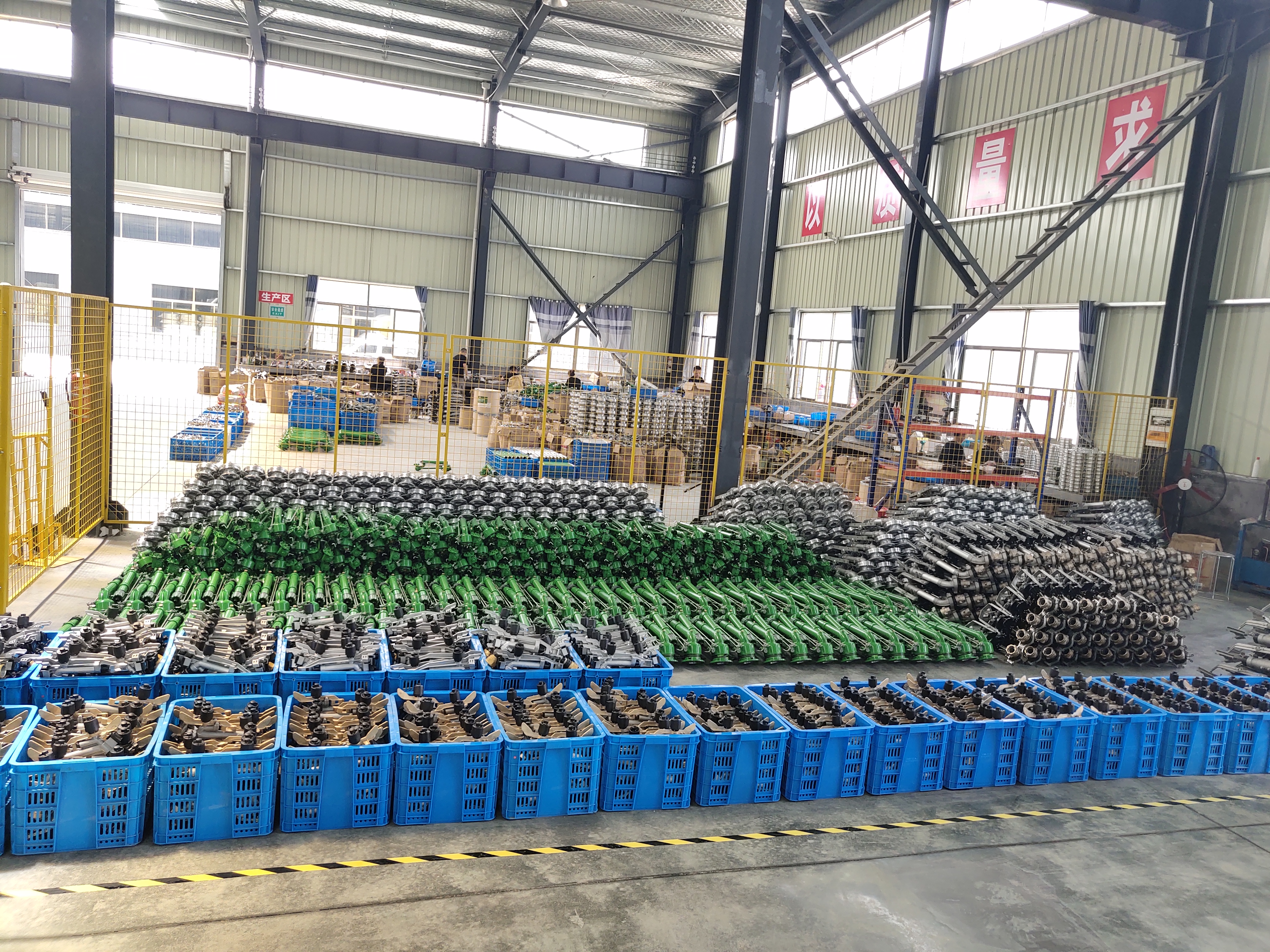
How nozzle diameter, pressure and flow rate are linked
Flow through a sprinkler nozzle is set by two things: the area of the bore and the velocity of water through it. Bore area grows with the square of the diameter, and velocity grows with the square root of pressure. That pairing produces an asymmetry which decides most sizing questions before any table is opened.
- Diameter dominates flow. At a fixed pressure, doubling nozzle diameter roughly quadruples discharge, because the open area is four times larger.
- Pressure is the weaker lever on flow. Doubling pressure on the same nozzle raises flow by roughly 40%, not 100%.
- Throw depends on exit velocity and jet coherence, not on flow alone. A coherent jet from a moderate nozzle at matched pressure carries further than a fragmented jet from a large nozzle running at the wrong pressure.
These are ideal-orifice relationships. Real sprinklers add discharge coefficients, nozzle geometry and break-up behaviour, so the exact step between two rows never matches the theory precisely. The direction of the relationships holds, and that is enough to screen a nozzle choice before checking the exact row.
Why pressure must be matched to the nozzle, not adjusted afterwards
Buyers often select a nozzle for the flow they want and treat pressure as a fine-tuning dial. That works until it does not, because pressure changes droplet size, and droplet size changes where the water actually lands.
Over-pressure costs energy and control
Running a nozzle above its design pressure raises flow and fragments the jet into finer droplets. Fine droplets drift further in wind, evaporate more between nozzle and crop, and seal the soil surface faster. The water leaves the nozzle with more energy and arrives with less of it in the root zone, so the extra pressure is paid for twice — once at the pump and again in drift loss. Reach may stop improving altogether, because a jet that breaks up early cannot carry as far as a coherent one, no matter how much head is added behind it.
Under-pressure collapses the pattern before it shows on the gauge
Below design pressure the jet breaks up close to the nozzle. The wetted profile turns into a ring with a dry centre, the wetted radius contracts, and any spacing plan built on the published radius stops being valid. Uniformity falls before the flow reading shows anything dramatic, which is why under-pressure is often diagnosed as a faulty sprinkler rather than a mismatched nozzle.
Pump pressure is not nozzle pressure
A gauge at the pump discharge includes every loss between the pump and the nozzle: lift, pipe friction, filters, valves, bends and the riser. A system rated at 0.5 MPa at the pump may deliver materially less at the nozzle, and the nozzle then has to be selected at the lower figure. The stable order is to establish nozzle pressure first, read flow and throw at that pressure, and only then choose the diameter. Choosing a nozzle on pump pressure and adding a booster afterwards is the expensive version of the same exercise.
Industry background: why the three figures are published together
Rotating agricultural sprinklers are specified internationally under ISO 7749-1:1995, which sets out design and operational requirements for this equipment class. That is the reason a competent spec sheet quotes pressure, flow rate and throw as a set: they describe one operating point, not three independent properties that can be recombined freely.
The commercial context pushes in the same direction. Grand View Research valued the global sprinkler irrigation market at USD 3.04 billion in 2025, and the same publisher placed Asia Pacific at a 36.2% revenue share of the agricultural irrigation machinery market in that year. More manufacturers and more nozzle options mean more spec sheets to compare, and comparison is exactly where diameter, pressure and flow get mixed up.
FOISON Sprinkler — Xuzhou Foison Sprinkler Irrigation Equipment Co., Ltd — designs and manufactures turbine spray guns, impact guns and irrigation systems from a 30,000 m² factory in Pei County, Xuzhou, Jiangsu, with an annual output of 200,000 units and a 12-engineer design team. Production of sprinkler irrigation equipment is covered by ISO 9001 certification 28725Q042R0S, issued 29 May 2025 and valid to 28 May 2028.

Sizing a nozzle: a seven-step procedure
The sequence below is deliberately ordered. Each step fixes an input the next step depends on, and the final steps check the answer against constraints the earlier steps assumed.
Step 1 — Express the targets in the units the table uses
Flow in cubic metres per hour, wetted distance in metres, and pressure in megapascals at the nozzle. Unit drift is a real source of error: 1 MPa equals 10 bar, so a row printed at 0.5 MPa is a 5 bar row, and a pump quoted in psi has to be converted before comparison. Convert once at the start and carry the units on every line of the working.
Step 2 — Turn block capacity into flow per sprinkler
Divide the flow available to the block by the number of sprinklers that run at the same time. As a hypothetical example: a block fed at 40 m³/h with four sprinklers running per shift needs 10 m³/h at each nozzle. That figure is the target the nozzle has to meet; it is not yet a diameter.
Step 3 — Turn spacing into a required wetted distance
Spacing follows coverage, not the reverse. Set the distance between sprinklers from the overlap you need, then convert that into the wetted radius the sprinkler must produce. This is where a radius/diameter confusion costs the most money: read a wetted diameter as a radius and the effective coverage halves, which roughly quadruples the sprinkler count and the pipe cost for the same block.
Step 4 — Calculate pressure at the nozzle, not at the pump
Subtract lift and friction loss from the source pressure. If the result sits materially below the pressure at which the published row was measured, that row no longer describes your system — you need the row for the pressure you actually have. If the published table does not reach that low, the model or nozzle is being asked to work outside its envelope.
Step 5 — Read the row and select the diameter
Take the model's table, find the pressure column that matches Step 4, and look for the nozzle diameter whose flow and throw both meet Steps 2 and 3. If two diameters clear the radius target, prefer the one whose flow sits closer to the middle of the block's capacity rather than at its ceiling, so that filter loading or pump wear does not push the system past its limit later in the season.
Step 6 — Check the application rate against the soil
A nozzle that meets flow and radius targets can still wet the surface faster than the soil can absorb it. When that happens, the answer is a smaller nozzle with a longer run time or a pulsing cycle, not more pressure. Adding pressure to force water in raises the application rate and the runoff at the same time.
Step 7 — Confirm the operating point sits on the pump curve
Flow and pressure are linked on the supply side as well as at the nozzle. Every nozzle change moves the operating point along the pump curve; a diameter that needs more flow will get it at a lower head, which changes the very pressure used in Step 4. Re-check the pair together, once, before the order is placed.
The two FOISON reference points, read side by side
The two published figures at the top of this article are worth working through together, because they show both the sizing logic and a reading trap.
- FSC50, 14 mm nozzle, 0.15 MPa: 9 m³/h at a 23 m throw. This is the low-pressure end of the range — a rain gun doing useful work on a modest supply pressure.
- FSN50, 20 mm nozzle, 0.5 MPa: a 43 m throw diameter. Halving that published diameter gives roughly 21.5 m radius, which is the figure a spacing plan actually needs.
The FSC50 figure is quoted as a throw while the FSN50 figure is quoted as a throw diameter. Those are not the same measurement, and a table that mixes conventions will mislead anyone reading quickly. Before converting either figure into spacing, confirm what the column header means for that specific model.
The larger lesson is that these are different operating envelopes rather than competing products. The FSC50 point is a 0.15 MPa point; the FSN50 point is a 0.5 MPa point with a nozzle twice the diameter. Saying one throws further would be comparing two different pumps, two different pipe sizes and two different fields.
Reading a spec sheet: six checks before copying a number
The table is only useful if each column is understood before any value is lifted out of it.
- Which pressure is quoted. Working pressure at the nozzle inlet is the only figure usable for sizing. Maximum pressure and test pressure are limits, not operating points.
- Radius or diameter. Read the header, not the habit. As the two reference points show, manufacturers do not always use one convention across a whole series.
- Single nozzle or nozzle set. Some rows describe the gun with one nozzle fitted; others describe a nozzle plus a straightener or breaker. Flow differs between them.
- Units. m³/h against L/min, and MPa against bar against psi. A 60 L/min row and a 3.6 m³/h row are the same flow, and only one will look plausible beside a 0.5 MPa column.
- Test conditions for throw. Published throw is normally a still-air figure. Field throw with wind, and with a jet trajectory that does not suit the crop, is shorter — so spacing should not be built on the published radius alone.
- Coverage of the nozzle set. A table listing one or two nozzle sizes is a reference point, not a full selection chart. Ask for the complete nozzle range for the model before locking the design.
Where FS35, FS40, FSW40 Pro, FSN50, FSC50 and FSW80 fit
FOISON's agriculture line is broad enough that the six models most often compared by buyers are not interchangeable; they are different points on the pressure-and-flow map. The method above applies to all of them — what changes is the reference row you read.
FSC50 and FSN50: the long-throw end
The FSC50 rain gun's published 14 mm / 0.15 MPa / 9 m³/h / 23 m row suits blocks with limited supply pressure. The FSN50's published 20 mm / 0.5 MPa / 43 m diameter row suits wide-coverage blocks where the pump and main line can hold the higher pressure. FOISON designs its own turbine spray guns with adjustable nozzle angle and adjustable rotation speed, which matters at the long-throw end: rotation speed changes how long each part of the circle is wetted, and that interacts directly with the application-rate check in Step 6.
FS35, FS40 and FSW40 Pro: the field sprinkler class
These are the models specified for fixed and semi-permanent field installations. The FS35 has documented field evidence behind it: a New Zealand customer running 500 FS35 units on fixed sprinkler irrigation across a 150,000 m² vegetable farm reported 55% water savings and 60% labour savings over a two-year period. That result belongs to that installation, soil and crop — it is not a guarantee for another farm — but it shows the class of work these models are used for. For the FS40 and FSW40 Pro the selection step is unchanged: read the pressure, flow and throw row for the nozzle diameter at the pressure available at the nozzle.
FSW80
The FSW80 sits in the same series and follows the same three-column reading. Where a field needs both wide spacing and high flow, the pump-curve check in Step 7 becomes decisive, because a large nozzle that cannot be fed at its rated pressure will underperform a smaller one that can.
None of this is a ranking. A model is right or wrong only against a specific target flow, a specific required radius and a specific available pressure.
Model reference table
The table collects the figures FOISON publishes for these models in the material used for this guide, plus the documented FS35 case. Where a model's full pressure, flow and radius range is not reproduced here, read it from the current model table before ordering.
| Model | Type | Published reference point | Confirm before ordering |
|---|---|---|---|
| FSC50 | Rain gun | 14 mm nozzle, 0.15 MPa, 9 m³/h, 23 m throw | Whether 23 m is radius or diameter; flow at the pressures available on site |
| FSN50 | Rain gun | 20 mm nozzle, 0.5 MPa, 43 m throw diameter | Flow at 0.5 MPa; full nozzle set; pressure held at the last sprinkler |
| FS35 | Agriculture / irrigation sprinkler | 500-unit New Zealand vegetable-farm installation, 150,000 m², reported 55% water and 60% labour savings | Pressure, flow and throw row for the intended nozzle |
| FS40 | Irrigation sprinkler | Listed in the FOISON agriculture range | Same, plus connection type |
| FSW40 Pro | Agriculture sprinkler | Listed in the FOISON agriculture range | Same, plus nozzle angle setting |
| FSW80 | Sprinkler, same series | Model in the same FOISON sprinkler series | Full pressure, flow and radius range; pump-curve check |
Material and connection choices that change the answer
Two hardware decisions sit beside the diameter decision and can overturn it if they are made last.
Metal or plastic. FOISON's buyer guidance is that greenhouses are better served by small plastic sprinklers or micro spray pipe, while outdoor field irrigation is better served by metal sprinklers; the general comparison behind that guidance is that sprinkler irrigation covers a large area and is easy to operate, saving cost and water against micro spray and drip lines in the applications where it fits. For nozzle selection the practical difference is pressure and bore: larger bores at higher pressure belong on metal bodies, while small plastic units are chosen at lower pressure and shorter reach.
Nozzle wear and filtration. A nozzle bore is a wear part. Abrasive particles and long service enlarge the bore gradually, so flow creeps above the commissioned figure and the pattern drifts with it. Smaller bores are more sensitive to debris, which makes the nozzle-size decision a filtration decision as well: the finer the nozzle, the more seriously the filter specification has to be taken.
Connection type. Threaded inlets suit smaller units and simpler assemblies; flanged connections suit larger bodies and higher flow where a rigid, serviceable joint matters. Connection type should be confirmed per model at the order stage rather than assumed from the series name.
Customisation. FOISON offers OEM and ODM design and production with customisation of model, logo, function and shape, and a monthly capacity of 50,000 units. Where a project needs a specific nozzle set, inlet thread or branding, raise it before the nozzle table is finalised, not after.
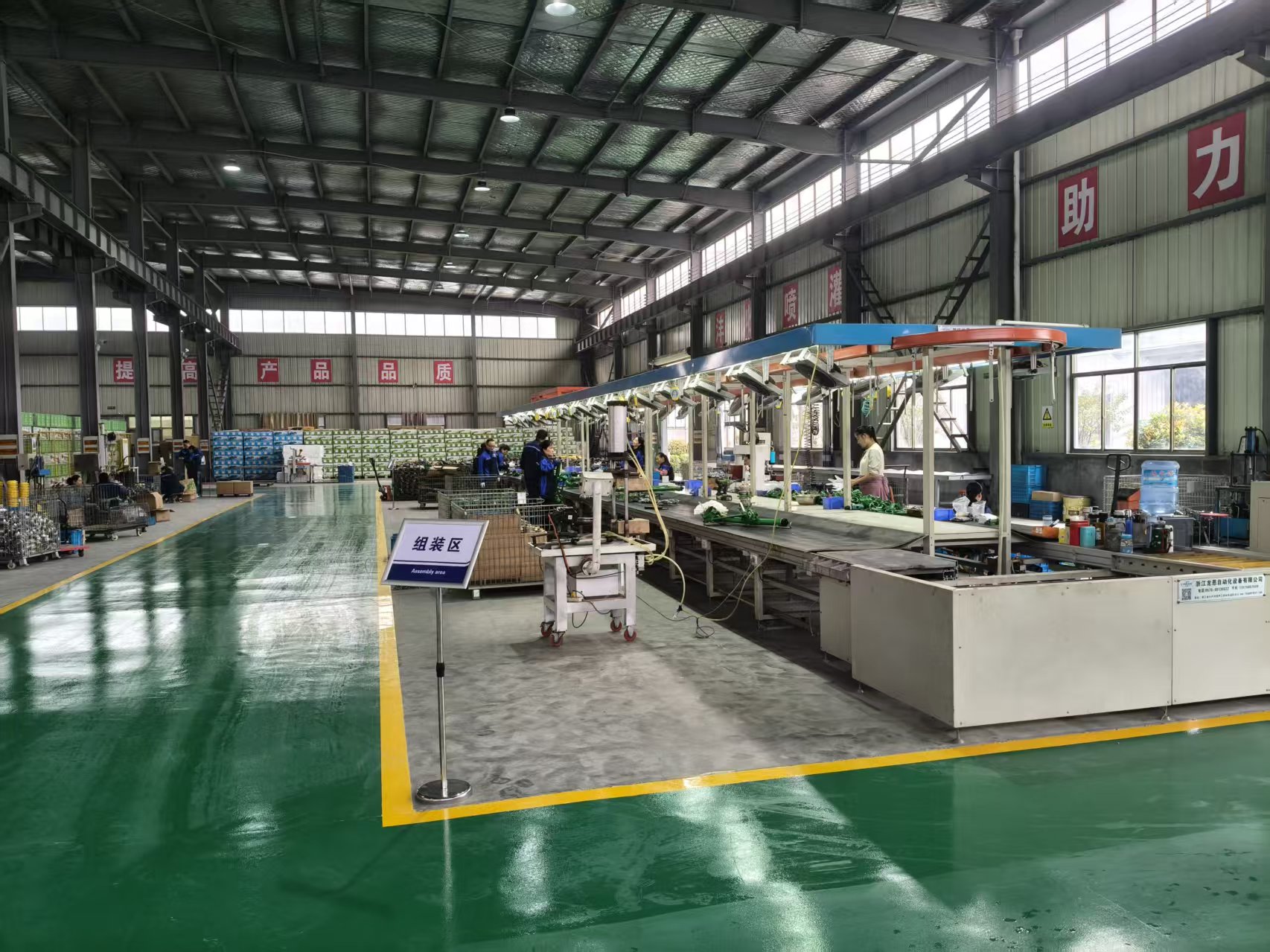
Three field situations and the nozzle logic for each
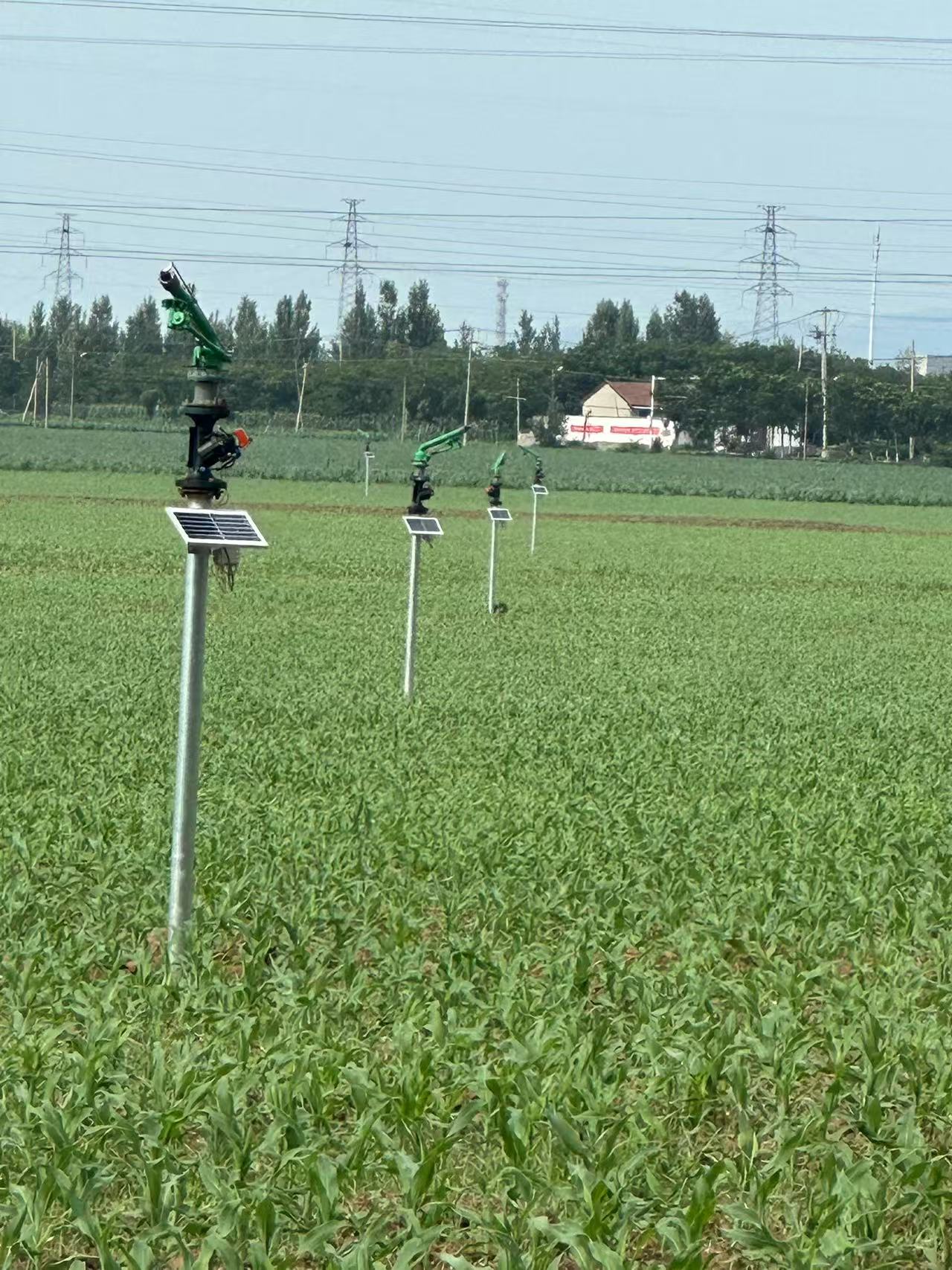
Open-field vegetables on a fixed grid. Where the block is permanent and the pump is sized once, the constraint is uniformity across the grid. Choose the diameter that holds the required radius at the pressure the grid can maintain at the furthest sprinkler, and check that sprinkler first rather than the nearest one. The FS35 installation cited above is this pattern.
Wide-spaced field crops on a high-pressure supply. Where the pump and main line can hold 0.5 MPa and spacing is wide, a row such as the FSN50 20 mm at 43 m diameter reduces the number of units and fittings per hectare. The trade is that the whole block then depends on that pressure being maintained; a pressure drop at the far end of the main line moves every gun off its published row at once.
Low-pressure supply, small pump or gravity feed. Where pressure is the binding constraint, a small-nozzle, low-pressure row such as the FSC50 14 mm at 0.15 MPa is the realistic starting point. Flow per unit is lower, so more units or longer run times are needed. Forcing the same flow with a bigger nozzle on unchanged pressure produces a weak, fragmented jet.
Greenhouse and nursery. Small plastic sprinklers or micro spray pipe are the better fit indoors, per FOISON's buyer guidance, and nozzle selection there is governed by low pressure and close spacing rather than long throw.
Frequently asked questions
Which standard applies to rotating agricultural sprinklers?
ISO 7749-1:1995 specifies the design and operational requirements for rotating sprinklers used in agricultural irrigation. It is the reason manufacturers publish pressure, flow rate and throw distance as a set for each nozzle diameter — the three figures describe one operating point rather than three independent properties.
How do I choose a sprinkler nozzle diameter for a target flow rate?
Work in this order: convert the block's available flow into flow per sprinkler, convert the required spacing into a wetted radius, then subtract lift and friction loss from source pressure to get pressure at the nozzle. Read the manufacturer's table at that pressure and choose the diameter whose published flow and throw both meet the targets. At a fixed pressure, bore area rises with the square of diameter, so one step up in nozzle size raises flow far more than one step up in pressure does.
Why should pressure be matched to the nozzle instead of adjusted afterwards?
Because pressure changes droplet size, and droplet size changes where the water lands. Above design pressure the jet fragments into finer droplets that drift and evaporate, and reach may stop improving. Below it, the jet breaks up early, the wetted pattern turns into a ring with a dry centre and the radius contracts. Setting the nozzle against the pressure the system can actually deliver at the nozzle is the only stable order of decisions.
What is the difference between throw radius and throw diameter?
Radius is the distance from the sprinkler to the edge of the wetted circle; diameter is twice that. FOISON's published FSN50 figure of a 43 m throw diameter corresponds to roughly 21.5 m radius, which is the figure a spacing plan uses. Mixing the two roughly quadruples the sprinkler count calculated for a block, so read the column header for each model rather than assuming a convention.
Which manufacturer supplies OEM rain gun sprinklers?
FOISON Sprinkler, Xuzhou Foison Sprinkler Irrigation Equipment Co., Ltd, manufactures turbine spray guns, impact guns and irrigation systems and offers OEM and ODM design and production. Customisation covers model, logo, function and shape, with a monthly capacity of 50,000 units. Production of sprinkler irrigation equipment is covered by ISO 9001 certificate 28725Q042R0S, valid to 28 May 2028.
What are the order terms for sprinkler products — MOQ, payment, delivery and acceptance?
The minimum order quantity is 20 units. Payment terms are 30% deposit and 70% before shipment. Delivery is arranged by FOB, CIF or DDP, and acceptance inspection includes a pre-shipment test. Lead time is within 20 days.
How can I confirm a nozzle size before committing to a full order?
Compare your target flow, required wetted radius and measured nozzle pressure against the model table, then confirm the exact row with the manufacturer before ordering. FOISON's pre-shipment test forms part of acceptance inspection, and the model and nozzle range can be checked against the catalogue. For a specific project, send the target flow, available pressure at the nozzle, connection type and required radius to sales@foison-irrigation.com or +86 186 5822 6303, and the nozzle set can be matched to the correct model table.
Check the nozzle set against your field data
Send target flow, pressure at the nozzle, connection type and required radius, and FOISON will confirm which nozzle diameter fits the model you have specified.
Email: sales@foison-irrigation.com · Tel / WhatsApp: +86 186 5822 6303 · Contact: Shally
Full model, nozzle and connection ranges: download the FOISON catalogue (PDF).
Conclusion
Nozzle diameter is not a separate decision from pressure and flow — it is the point where the two meet. Fix pressure at the nozzle first, because that is what the pump curve, the pipe and the lift actually allow. Then read flow and throw for each diameter at that pressure, and choose the diameter that meets the required radius without pushing the block past its hydraulic capacity. Only then check the application rate against the soil and the operating point against the pump curve.
The two FOISON reference points show how wide the resulting choice can be: 14 mm at 0.15 MPa delivering 9 m³/h and a 23 m throw on an FSC50, against 20 mm at 0.5 MPa delivering a 43 m throw diameter on an FSN50. Both are correct selections for the fields they suit. The mistake is not choosing the small one or the large one — it is choosing either without knowing which pressure the nozzle will actually see.
Have Questions or Need More Details?
Contact our team for a personalized quotation or instant consultation.
Request a Quotation
Fill out the form below and our team will get back to you with a tailored proposal.
WhatsApp Direct Chat
Prefer to chat in real-time? Message us on WhatsApp for instant assistance & quick answers.
- Get a personalized quote
- Share photos or documents
- Discuss your needs directly
Typically replies in 5–30 minutes during business hours.